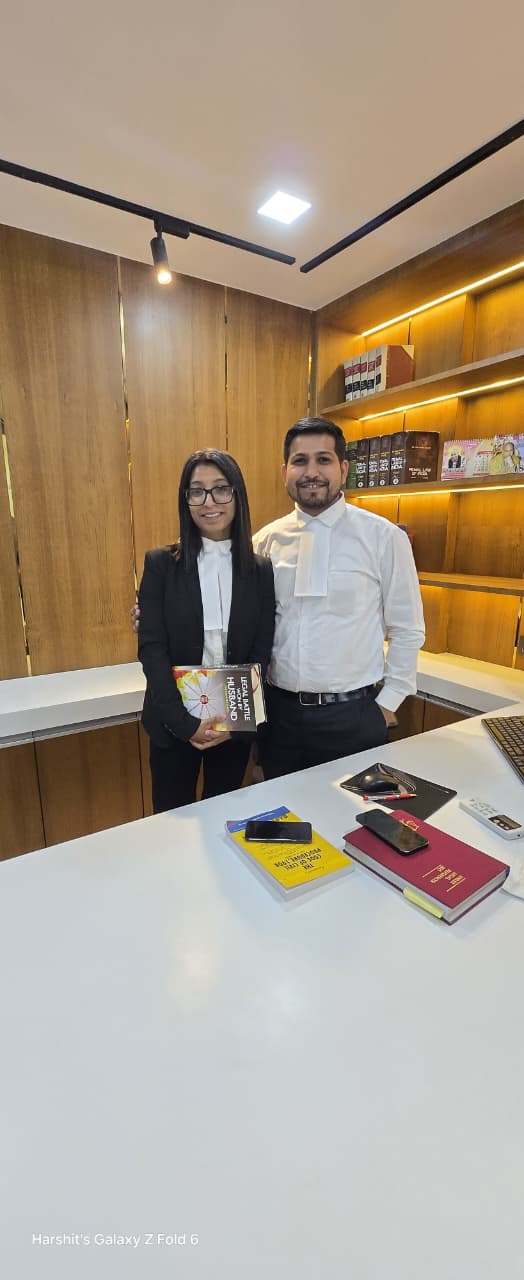
By Kanish Bangia & Archana Saini
Izzat ki buhut si qismein hain
Ghunghat, thappad, gandum
Sara Shagufta, through these beautiful lines, carefully pens down how the honor and worth of women in all spaces are more or less associated with ‘Ghunghat, thappad, gandum.’ On other occasions, we have also come across (although amiss) phrases from Manusmriti (Chapter 5, Shlokas 148 & 149), where the independence of women is made subjective to the wishes of male counterparts of their families and societies. It is no surprise that women have been at the receiving end of society since immemorial times. However, another class of people in the spectrum that has continued to struggle for their honor, even in contemporary times, remain the senior citizens, who in the fag ends of their lives, have been subjected to destitute and ill-treatment at the hands of their children. undoubtedly, there has been consistent support for the development and empowerment of both these classes, not only through legislative actions and reform policies but also through judicial pronouncements.
The Conflict Between the DV Act and Senior Citizens Act
However, a complicated situation is induced when the rights of women(under the Domestic Violence Act,2005) on the one hand and the rights of senior citizens(under Senior Citizens Act, 2007) on the other, meander to form a complex vortex, crushing down the spirit of both the statutes. The crucial right of residence in a “shared household” available to daughters in law under Section 17 of the DV Act has raised fundamental issues when faced with the dilemma of giving due importance to the right of eviction available to the senior citizens under the Senior Citizens Act, as is also evident from the numerous cases that have been reported before the Honorable Supreme Court and the subordinate judiciary. The presence of a non-obstante clause in the Senior Citizens Act gave the legislation an upper hand in disputes over the DV Act, thus relegating the rights of women, or daughters in law in such cases, to a secondary and perhaps non-existent position.
Supreme Court Intervention: Harmonious Construction
“To evict or not to evict?” When faced with this conundrum of deciding in favor of these conflicting interests, the Supreme Court of India in S. Vanitha v. Deputy Commissioner, Bengaluru Urban District, 2020, ruled out that the two statutes need to be harmoniously construed to avoid a miscarriage of both the laws. The Court thus held that a literal interpretation of the non-obstante clause of Section 36 of the Senior Citizens Act could not be made an excuse to relegate women to a secondary position, throwing most women out of their conjugal homes, homeless and destitute.
In another landmark ruling by the Supreme Court in Prabha Tyagi v. Kamlesh Devi, 2022, the Court has further added to the scope of a “shared household” to be inclusive of any household where the woman has resided jointly with her husband, irrespective of the fact that the ownership may have been transferred to her in-laws subsequently or the women may have been living separately for a reasonable cause. Thus, the right to reside in a shared household would include not only actual residence but also constructive residence.
With these beautiful judgments, it is discernible that with time, the contemporary Courts have recognized the worth of women beyond just ghunghat and gandum. It is, however, time for our contemporary society to look beyond the veil and see a human as a human and not a human as a gender stereotype.